

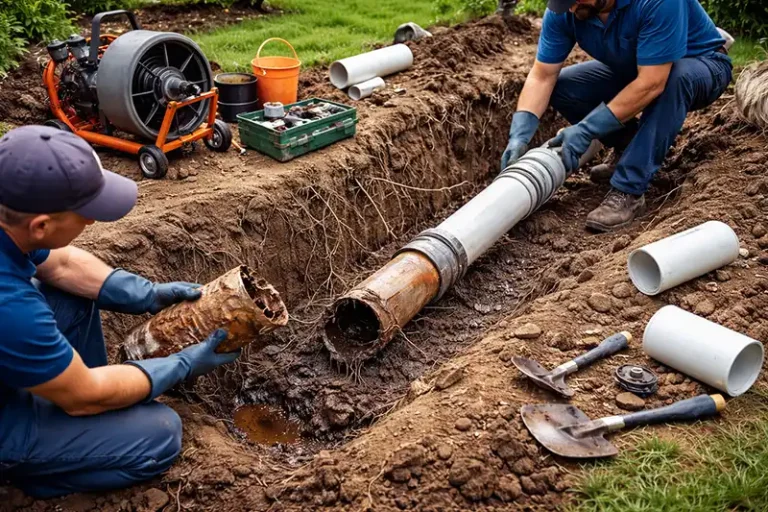
A damaged sewer line can cause serious plumbing problems, including slow drains, unpleasant odors, sewage backups, and property damage. Unfortunately, sewer line repairs and replacements can also be expensive. One of the first questions homeowners ask when facing this problem is: Does homeowners insurance cover sewer line replacement?
The answer depends on your insurance policy and the cause of the damage. Standard homeowners insurance generally does not cover sewer line replacement when the problem results from normal wear and tear, aging pipes, corrosion, or tree root intrusion. However, certain sudden and accidental events may qualify for coverage.
Additional protection, such as service line coverage, may also help pay for sewer line repairs and replacement.
In this guide, Poseidon Plumbing explains when homeowners insurance may cover sewer line replacement, what it typically excludes, and what you can do if your sewer line is damaged.
Does Homeowners Insurance Cover Sewer Line Replacement?
In most cases, standard homeowners insurance does not cover sewer line replacement caused by gradual deterioration, corrosion, tree roots, or poor maintenance. These problems are generally considered routine maintenance responsibilities.
However, some policies may cover sewer line damage if it results directly from a sudden, accidental event that’s included in the policy.
For example, if a covered event such as a fire or certain types of accidental physical damage destroys an underground sewer pipe, your policy may help pay for repairs. Coverage depends on the policy wording, exclusions, and applicable limits.
Homeowners can also purchase optional service line coverage, which may protect underground sewer pipes against certain types of damage that standard policies exclude.
Before filing a claim, review your policy and contact your insurance provider to confirm what is covered.
When Does Homeowners Insurance Cover Sewer Line Damage?
Although coverage varies between insurers, there are situations in which a homeowners insurance policy may help cover sewer line damage.
1. Sudden and Accidental Damage
Some standard homeowners policies cover sudden and accidental damage caused by specific insured events.
For example, if a covered event directly damages a sewer line on your property, your policy may help pay for the necessary repairs or replacement.
However, not every unexpected pipe failure qualifies. The insurer will generally examine what caused the damage and whether that cause is covered.
2. Damage Caused by a Covered Event
Certain policies may cover sewer line damage caused by events such as fire, lightning, explosions, or vehicle impact.
For instance, if a vehicle accidentally strikes an underground utility installation and damages a sewer pipe, coverage may apply depending on your policy.
The important distinction is that the damage must result from a covered event rather than an excluded maintenance issue.
3. Resulting Water Damage Inside Your Home
Even when an insurance policy does not cover the damaged sewer pipe itself, it may cover certain resulting property damage.
For example, if a covered plumbing incident causes water damage to flooring, walls, or other insured property, your policy may help pay for the resulting repairs.
However, sewer backups often require separate water or sewer backup coverage. Check your policy carefully because coverage for the pipe and coverage for damage inside your home are different.
When Does Homeowners Insurance NOT Cover Sewer Line Replacement?
Many sewer line problems develop gradually, which is why standard homeowners insurance often excludes them.
Here are some common causes of sewer line damage that may not be covered by a standard policy.
1. Normal Wear and Tear
Sewer pipes deteriorate over time. Older pipes may develop cracks, leaks, corrosion, or structural weaknesses.
Because these problems generally result from aging and gradual deterioration, standard homeowners insurance usually does not cover the cost of replacing the damaged line.
2. Tree Root Intrusion
Tree roots are a common cause of sewer line damage. Roots naturally grow toward moisture and can enter sewer pipes through small cracks or loose joints.
As the roots grow, they can obstruct wastewater flow, enlarge existing cracks, and eventually damage the pipe.
Damage caused by gradual tree root intrusion is generally excluded from standard homeowners insurance. However, some service line endorsements may provide coverage.
3. Clogged Sewer Lines
Sewer lines can become blocked by grease, toilet paper, foreign objects, and other debris.
A routine blockage is generally considered a maintenance issue rather than an insured event. If a blockage causes a backup, separate coverage may be necessary for the resulting damage inside the home.
4. Corrosion and Pipe Deterioration
Older metal sewer pipes can corrode over time. As corrosion progresses, the pipe may become weak, develop leaks, or collapse.
Because corrosion and gradual deterioration are typically excluded from standard homeowners insurance, homeowners may have to pay for the replacement themselves unless they have additional coverage.
5. Improper Installation
Sewer pipes that were incorrectly installed may experience recurring drainage problems, leaks, or premature failure.
Most standard policies exclude damage caused by faulty workmanship or improper installation. However, the specific terms of your policy determine whether any resulting damage is covered.
What Is Service Line Coverage?
Service line coverage is an optional homeowners insurance endorsement that can help pay for repairs to underground utility lines on your property.
These lines may include sewer pipes, water supply lines, gas lines, and electrical connections.
Unlike standard homeowners insurance, some service line endorsements cover damage caused by problems such as:
- Tree root intrusion
- Corrosion
- Normal wear and tear
- Freezing
- Mechanical breakdown
- Certain types of ground movement
Coverage varies by insurer, and some policies exclude particular causes of damage.
Depending on your endorsement, service line coverage may also help pay for excavation, backfilling, and restoring landscaping after repairs.
Coverage limits and deductibles vary. Some policies offer limits of $10,000 or more, but homeowners should confirm their individual policy details before relying on this protection.
If you’re concerned about unexpected sewer line replacement expenses, ask your insurance provider whether service line coverage is available.
What Is the Difference Between Service Line Coverage and Sewer Backup Coverage?
Service line coverage and sewer backup coverage protect against different types of problems.
| Coverage type | What it may cover |
|---|---|
| Standard homeowners insurance | Certain sudden, accidental damage caused by covered events |
| Service line coverage | Repair or replacement of eligible underground sewer pipes |
| Sewer backup coverage | Certain damage inside the home caused by sewage backing up through drains |
| Home warranty | Certain covered plumbing repairs, subject to contract terms and exclusions |
For example, if tree roots damage your underground sewer pipe, service line coverage may help pay for repairing the pipe.
If sewage subsequently backs up into your basement, sewer backup coverage may help pay for eligible cleanup and interior property repairs.
Neither type of optional coverage guarantees payment for every incident. Check the limits, exclusions, and deductibles before filing a claim.
How Much Does Sewer Line Replacement Cost?
Sewer line replacement costs depend on several factors, including the length of the damaged pipe, its depth, the material, soil conditions, and the replacement method.
The total cost may also include excavation, labor, permits, and restoration of landscaping or hardscaping.
A minor repair may cost considerably less than replacing an entire sewer line. However, extensive excavation or difficult site conditions can increase the overall expense.
Before starting a replacement project, request a professional inspection and a detailed estimate. This can help you understand the extent of the damage and determine whether repair or replacement is necessary.
If you plan to file an insurance claim, ask your insurer whether it requires photographs, an inspection report, or other documentation before work begins.
What Should You Do If Your Sewer Line Is Damaged?
If you suspect that your sewer line is damaged, taking the right steps can help you address the problem and document any potential insurance claim.
Step 1: Look for Signs of Sewer Line Damage
Common warning signs include:
- Multiple drains clogging at the same time
- Sewage odors around your property
- Gurgling sounds from toilets or drains
- Water backing up into sinks, tubs, or toilets
- Unusually wet or sunken areas in your yard
- Unusually green patches of grass above the sewer line
These symptoms can indicate a sewer line problem, although a professional inspection is needed to identify the exact cause.
Step 2: Contact Your Insurance Provider
If you suspect that your sewer line damage may be covered, contact your insurance company promptly.
Explain the symptoms and ask whether your policy includes sewer line or service line coverage. Your insurer can also tell you what documentation is required to submit a claim.
Step 3: Document the Damage
Take photographs or videos of visible damage, sewage backups, and affected areas of your property.
Keep copies of inspection reports, repair estimates, and any communication with your insurer.
Avoid making permanent repairs before discussing the claim process with your insurance company, unless immediate work is necessary to prevent further damage.
Step 4: Schedule a Professional Sewer Line Inspection
A professional plumber can inspect your sewer line to determine the cause and location of the problem.
Depending on the situation, a plumber may use a sewer camera to inspect the inside of the pipe and identify cracks, root intrusion, blockages, or collapsed sections.
An inspection can help you understand whether your sewer line needs cleaning, repair, or complete replacement.
How Can You Prevent Sewer Line Damage?
Although not all sewer line problems are preventable, regular maintenance can help reduce the risk of serious damage.
- Schedule periodic inspections: A professional inspection can identify developing problems before they become major repairs.
- Keep grease out of drains: Grease and cooking oils can accumulate inside pipes and contribute to blockages.
- Be careful about what you flush: Avoid flushing wipes, hygiene products, paper towels, and other unsuitable materials.
- Plant trees carefully: Avoid planting large trees too close to underground sewer lines.
- Address recurring clogs promptly: Repeated blockages may indicate a deeper problem that requires professional attention.
Taking these precautions can help maintain proper sewer flow and reduce the likelihood of unexpected plumbing problems.
Professional Sewer Line Services From Poseidon Plumbing
A damaged sewer line can create significant inconvenience and potentially expensive repairs. Whether you’re experiencing recurring drain clogs, sewage odors, or suspected underground pipe damage, identifying the problem early is important.
Poseidon Plumbing provides professional plumbing and drain services to help homeowners address sewer line problems. Our team can help identify drainage issues and determine the appropriate repair or cleaning solution.
If your sewer line is damaged, a professional inspection can help you understand the condition of your pipes and the work needed to restore proper drainage.
Contact Poseidon Plumbing to discuss your sewer line concerns and schedule a plumbing service.
Call Poseidon Plumbing at (720) 585-4428 to get started.
Frequently Asked Questions
1. Does homeowners insurance cover sewer line replacement?
Standard homeowners insurance generally does not cover sewer line replacement caused by wear and tear, corrosion, aging pipes, or tree root intrusion. However, coverage may apply if a covered event causes sudden and accidental damage. Optional service line coverage may provide additional protection.
2. Does homeowners insurance cover sewer line damage caused by tree roots?
Standard homeowners insurance usually excludes damage caused by gradual tree root intrusion. However, some service line coverage endorsements may cover root damage. Check your policy for specific coverage terms and exclusions.
3. Does homeowners insurance cover a collapsed sewer line?
It depends on the cause of the collapse. If a covered event causes the sewer line to collapse, your policy may provide coverage. If the collapse results from aging, corrosion, or gradual deterioration, standard homeowners insurance generally will not cover it.
4. Does homeowners insurance cover sewer backups?
Standard homeowners insurance generally does not cover sewage backup damage unless the policy includes applicable coverage. A separate sewer or water backup endorsement may help pay for eligible damage to your home’s flooring, walls, and personal belongings.
5. What is service line coverage for sewer pipes?
Service line coverage is an optional insurance endorsement that may help pay for repairing or replacing underground sewer pipes. Depending on the policy, it may cover problems such as corrosion, tree root intrusion, and normal wear and tear, along with eligible excavation expenses.
6. How do I know if my sewer line needs replacement?
Common warning signs include frequent drain clogs, multiple slow drains, sewage odors, recurring backups, and unusually wet areas in your yard. A professional sewer camera inspection can help determine whether the pipe needs repair or replacement.
7. How much does it cost to replace a sewer line?
The cost depends on the pipe’s length, depth, material, location, and replacement method. Excavation and landscaping restoration can also affect the total. Request a professional estimate to understand the likely cost for your property.
8. Who is responsible for repairing a sewer line on my property?
Homeowners are generally responsible for the private sewer line connecting their home to the public sewer system. However, the exact point of responsibility depends on local regulations and utility requirements. Contact your local sewer authority to confirm which sections you are responsible for maintaining.
9. Should I file an insurance claim for sewer line damage?
If you suspect your sewer line damage is covered, contact your insurance provider to discuss your policy and deductible. Ask about the documentation required and whether an inspection is necessary before proceeding with repairs.
10. Can a plumber help with sewer line replacement?
Yes. A licensed plumbing professional can inspect the sewer line, identify the cause of the damage, and recommend repair or replacement. A plumber can also provide an estimate and explain the work required to restore proper drainage.
Final Thoughts
So, does homeowners insurance cover sewer line replacement? In most cases, standard policies do not cover damage caused by aging pipes, corrosion, tree roots, or ordinary wear and tear. However, coverage may be available for certain sudden, accidental events or through an optional service line endorsement.
Understanding your insurance policy before a sewer line emergency can help you prepare for unexpected repair expenses. If you notice recurring clogs, sewage odors, or other signs of sewer line damage, arrange a professional inspection to identify the problem.
For professional sewer line and drain services, contact Poseidon Plumbing. Our team can help you identify plumbing issues and find an appropriate solution for your home.
Call (720) 585-4428 to schedule your service.