

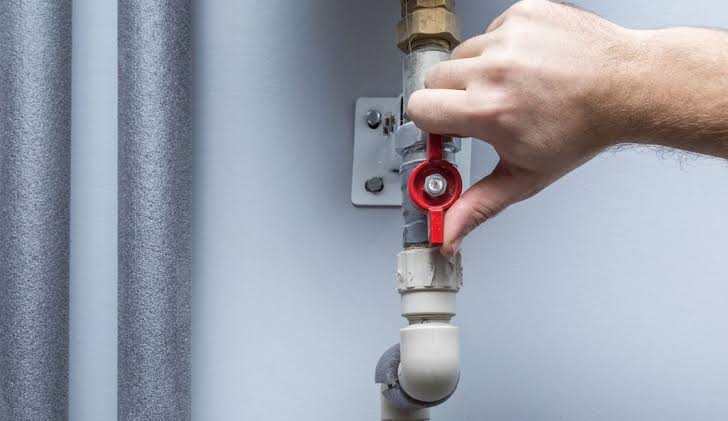
Your main water shutoff controls the water entering your home. Knowing where it is and how to use it can help you limit water damage when a pipe bursts, a supply hose breaks, or a major leak starts.
When water is spreading across your floor, you need to know how to stop more from coming in. Calling a plumber is important, but shutting off the supply can help keep the problem from growing while you arrange repairs.
At Poseidon Plumbing, we want homeowners in Brighton and the Denver front range area to know this simple part of their plumbing before an emergency happens.
What does your main water shutoff do?
Your main water shutoff is a valve on the pipe that supplies your home with water.
When it is open, water flows into the house and branches out to sinks, toilets, showers, appliances, and other connected plumbing. Closing it stops new water from passing through the valve.
Individual fixtures may have their own smaller shutoffs. The main valve controls the supply to most or all of your home’s domestic plumbing at once.
That makes it useful when a leak is large, its source is unclear, or a smaller shutoff will not work.
Why is knowing where it is so important?
A plumbing emergency is the wrong time to start searching for the valve.
You might hear water spraying behind a wall or discover a puddle spreading from the laundry room. You may not immediately know which connection failed, but knowing how to stop the supply gives you a practical first step.
It helps limit additional water damage
Towels and buckets can help contain water, but they cannot stop a broken pipe from being fed by a pressurized supply.
Closing the correct valve helps stop that ongoing flow. It does not remove water already on the floor, but it can help reduce further damage to flooring, cabinets, drywall, and belongings.
It gives your household a clear first action
If a leak starts while you are away, another adult in the household may need to act.
Everyone who may be responsible for the home should know where the main shutoff is and how to reach it. A clearly labeled valve with an unobstructed path is much more useful than one hidden behind storage boxes.
It helps you prepare for frozen-pipe problems
Freezing temperatures can damage vulnerable pipes. A frozen pipe may begin leaking as it thaws.
Knowing your shutoff location helps you respond if a break becomes apparent. Turning off the supply does not repair the pipe or replace proper freeze protection, but it can help control water escaping through a break.
It helps you discover whether the valve works
Knowing where the valve is only helps if it can actually stop the water.
A valve that is stuck, leaking, or unable to close fully may need professional attention. Discovering that during a planned inspection gives you time to arrange repairs before an emergency.
When should you turn off the main water supply?
Situations that may call for the main shutoff include:
- A burst or cracked water supply pipe.
- A broken washing machine hose or appliance supply line.
- Water spraying from a damaged plumbing connection.
- A major leak when the nearby fixture valve will not work.
- An unidentified supply-side leak that is spreading water.
- Plumbing repairs that require the household supply to be isolated.
If a leak affects only one fixture, its individual shutoff may be enough. For a large or unidentified supply-side leak, the main valve may be the more useful option.
If reaching the valve requires entering standing water near electrical equipment, stay clear and get emergency assistance.
Do sinks, toilets, and water heaters need their own shutoff valves?
Individual shutoff valves let you isolate a fixture or appliance without turning off the water to the rest of the house.
You may find:
- Sink shutoffs under the cabinet, usually controlling the hot and cold supply lines separately.
- A toilet shutoff near the wall or floor behind the toilet, controlling the water that refills the tank.
- A water heater shutoff on the cold-water supply entering the unit.
These smaller valves are useful during repairs and certain leaks. A water heater shutoff does not necessarily stop water already stored in a leaking tank.
Need a shutoff valve under your sink, behind your toilet, or at your water heater? We can install or replace it so you can turn off the supply to that fixture or appliance when needed.
Will the main shutoff stop every water problem?
No. The main valve stops incoming water that passes through it.
Water already in pipes may continue to drain briefly. Water stored in a toilet tank or water heater may also remain available to leak.
Closing the main valve will not stop a roof leak, groundwater entering your basement, or a sewer backup originating outside your home’s water supply. A service-line leak before the valve may require help from your water provider.
The shutoff helps control the water supply. The damaged pipe or connection still needs repair.
Where is your main water shutoff usually located?
In many Colorado homes, it is inside near the point where the water supply pipe enters the building.
Common places to check include:
- The basement, near a foundation wall.
- A utility or mechanical room.
- An accessible crawl space.
- Near an indoor water meter, water heater, or laundry area.
The location varies by home. A valve near your water heater may control only the heater, so have a plumber confirm which valve serves the whole house if you are unsure.
Once identified, label it MAIN WATER SHUTOFF, keep the area clear, and show other household members where it is.
How do you turn it off?
The method depends on the valve:
- Lever-style ball valve: Typically closes with a quarter turn, leaving the handle perpendicular to the pipe.
- Round-handled gate valve: Generally closes by turning the handle clockwise.
Operate it slowly and gently. Do not force a stuck or corroded valve.
During a planned test, confirm that closing the valve stops the supply to household faucets after residual water drains. Reopen it slowly when the test or repair is complete.
What if you cannot find it or it will not close?
Give us a call. We can help identify your home’s shutoff and evaluate its condition.
If water is actively leaking and the indoor valve cannot stop it, contact your water provider for an emergency shutoff.
Do not assume a valve near the street is intended for homeowner use. Rules vary by water provider, so contact yours before attempting to operate utility equipment.
How can Poseidon Plumbing help?
We are a local, family-owned plumbing company, and we want you to feel comfortable asking questions about your home.
Our team can help with:
- Identifying your main shutoff and explaining what it controls.
- Evaluating unreliable valves and recommending repairs or replacement when needed.
- Installing or replacing individual shutoffs for sinks, toilets, and water heaters.
- Repairing leaking pipes and connections so the cause of the problem is addressed.
You do not have to wait for water on the floor to ask for help.
Know how to stop the water before you need to
Knowing where your main water shutoff is takes some uncertainty out of a plumbing emergency. Knowing that it works, keeping it accessible, and showing others how to use it makes that preparation more useful.
If a pipe started spraying water right now, would you know what to do?
Call our family-owned team at Poseidon Plumbing at (720) 585-4428 for help with shutoff valves, plumbing leaks, and water line repairs.